
5 Steps How to Systemise Your Business and Scale Without Adding Headcount
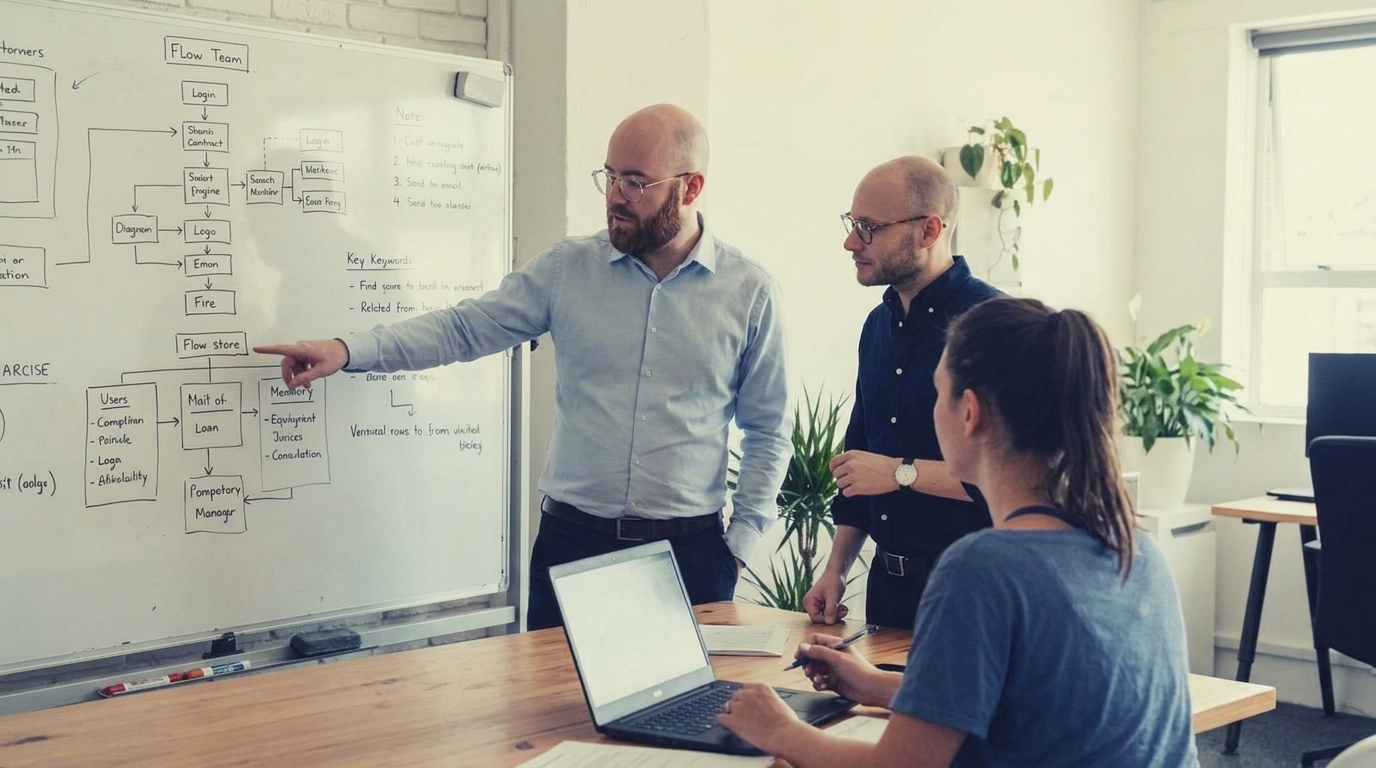
5 Steps How to Systemise Your Business and Scale Without Adding Headcount
For many established business owners, the word "scaling" often brings a sense of impending dread. Why? Because historically, scaling has been synonymous with hiring. In the traditional model, more revenue meant more work, which required more people, more management layers, more complex payrolls, and, ultimately, more headaches.
But here is the hard truth: if your business growth is tied directly to your headcount, you aren’t building a scalable asset: you’re building a complexity monster.
At Your Business Momentum, we work with established businesses (typically turning over $5 million or more) that have hit a ceiling. They have a great service, a solid reputation, and a talented team, but the owner is overwhelmed. The solution isn’t always "more hands on deck." Often, the solution is building better "tracks" for your current team to run on.
Systemisation is the bridge between a business that relies on the owner's heroics and one that operates as a high-performance machine. Here are five practical, hands-on steps to systemise your business so you can scale your revenue without ballooning your headcount.
Step 1: Audit Your Current Workflows (Identify the "Gravel")
Before you can build a sleek, automated highway, you need to find where the gravel is slowing your team down. Most established businesses have "shadow processes": undocumented ways of doing things that live only in the heads of long-term employees.
When processes aren't clear, your team spends 20% of their day just trying to figure out how to do the work rather than actually doing it. This is operational friction, and it’s the primary reason businesses feel they need to hire more people when they grow.

How to do it:
- Map the "End-to-End" Journey: Grab a wall and some sticky notes. Map out your core process from the moment a lead comes in to the moment the final invoice is paid.
- Identify Redundancies: Look for places where data is entered twice, where approvals take too long, or where tasks "go to die" in someone’s inbox.
- The "Wait Time" Check: Ask your team: "Where are you waiting for someone else before you can finish your job?" This is where your biggest capacity gains are hidden.
💡 Actionable Tip: Pick one department this week: Sales, Operations, or Finance. Ask the team to list the three tasks they find most frustrating or repetitive. These are your first targets for systemisation.
Step 2: Standardise and Document (Create Your Playbook)
Once you know where the bottlenecks are, you need to create a "standard way" of doing things. In a $5M+ business, you cannot afford "creative" ways of doing administrative tasks. You need a Business Playbook.
Documenting your systems doesn't mean writing 50-page manuals that nobody reads. Modern systemisation is about creating accessible, bite-sized guides that your team can refer to in real-time. This ensures that even if a key staff member is away, the business doesn't grind to a halt.

At Your Business Momentum, we are Certified SYSTEMologists™, meaning we don't just tell you to document: we help you build a culture where documentation is part of the daily workflow.
The Documentation "Golden Rules":
- Video over Text: Use tools like Loom to record a screen-share of a process. It takes five minutes to record and is far easier to follow than a written document.
- Focus on the "Critical 20%": Don't try to document everything at once. Focus on the 20% of tasks that produce 80% of your results.
- Keep it Central: Whether it's a dedicated platform like Trainual or a simple organised SharePoint, your systems must be easy to find.
Step 3: Eliminate and Delegate (Pruning for Profit)
Systemisation isn't just about doing things faster; it's about not doing things that don't matter. As businesses grow, they often pick up "legacy tasks": reports no one reads, meetings that could be emails, and manual work that was necessary five years ago but isn't now.
To scale without adding headcount, you must ruthlessly prune low-value work. If a task doesn't improve the customer experience or increase the bottom line, it should be on the chopping block.

The "Three Ds" Framework:
- Delete: If the task provides no measurable value, stop doing it.
- Delay: If it’s not urgent or essential for growth, move it to a quarterly review list.
- Delegate (to Tech or Team): If it must be done, does it require a high-level manager’s time? Or can it be moved to a lower-cost resource or an automated tool?
By freeing up just 5 hours a week for each of your current employees through elimination, a team of 10 effectively gains the capacity of 1.25 new full-time hires: without the payroll cost.
Step 4: Automate the Heavy Lifting (Technology as an Employee)
Once a process is standardised and pruned, it’s ready for automation. This is where you truly break the link between revenue and headcount.
In 2026, technology is no longer just a tool; it’s a force multiplier. From CRM workflows that automatically follow up with leads to ERP systems that integrate your inventory with your accounting, automation allows your existing team to handle 3x the volume they could manually.

Where to Start Automating:
- Lead Management: Automatically route leads to the right person and send instant "thank you" or "booking" emails.
- Project Handoffs: Use project management software (like Monday.com or Asana) to trigger the next step in a workflow as soon as the previous one is marked "done."
- Data Reporting: Use tools like our Business Stage Diagnostic to get real-time insights instead of waiting for a manual end-of-month report.
💡 Actionable Tip: Look for "copy-paste" tasks. If a human is moving data from one software to another, use a tool like Zapier to bridge the gap. It’s cheaper, faster, and doesn't make typos.
Step 5: Embed a Culture of Momentum (Review and Accountability)
Systems are not "set and forget." The biggest mistake business owners make is building a system and then walking away. To maintain operational efficiency, you need a heartbeat of review.
This is where the concept of an Advisory Board or a structured management meeting becomes vital. You need to look at your KPIs (Key Performance Indicators) and ask: "Is the system still working? Where is the new bottleneck?"

Maintaining the Momentum:
- Monthly Performance Reviews: Don't just look at profit; look at system health. Are the standard operating procedures being followed?
- Continuous Improvement Feedback: Your front-line team members are the best people to tell you how to improve a system. Create a "System Suggestion Box" where they can flag inefficiencies.
- Accountability: Use your systems to define clear roles and responsibilities. When everyone knows exactly what they are responsible for, "ownership" increases, and the need for micro-management (which is a huge time-sink) disappears.
Why the "Hands-On" Approach Wins
Most consultants will give you a report and a list of suggestions, then wish you luck with the implementation. But we know that for a $5M+ business owner, the problem isn't a lack of ideas: it’s a lack of time to execute.
At Your Business Momentum, we don't just provide the roadmap; we get in the car and help you drive. Our Strategy & Implementation services are designed to bridge the gap between "we should do this" and "this is now how we work."
We roll up our sleeves to help you document those processes, set up that automation, and coach your team through the change. We focus on bespoke solutions because your business is unique, and "cookie-cutter" systems usually just create more clutter.
Ready to Scale Without the Stress?
Scaling your business should be an exciting journey, not a recipe for burnout. By focusing on systemisation, you can reclaim your time, boost your profits, and build a business that can grow as big as your vision: without needing a massive army of people to run it.
Take the first step toward a more efficient business.
If you want a quick diagnostic angle, start with our Systems Strength Test to see where your current systems may be creating bottlenecks, inefficiencies, or capacity issues.
If key person dependency is one of the risks sitting in the background, download the Succession Readiness Checklist: 4 Steps to Mapping Your Business Structure. It will help you identify structural gaps and reduce over-reliance on specific people in the business.
For a broader snapshot of where your business is today, you can also use our Business Stage Diagnostic to get clarity on your next priorities.
👉 Take the Systems Strength Test Here
👉 Download the Succession Readiness Checklist Here
👉 Take the Business Stage Diagnostic Here
Looking for more hands-on help? Contact Greg and the team today to discuss how we can help you bridge the gap between strategy and execution.
.png)
.png)
.png)